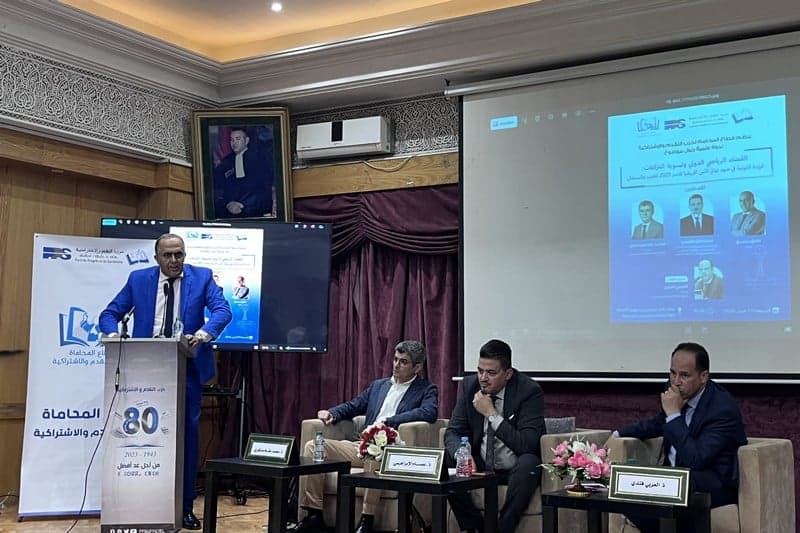
Moroccan lawyers examine the facts of the African Cup final between the “Lions” and Senegal
Lawyers and specialists in sports law have put “international sports justice and dispute settlement” under a legal reading microscope, examining it in light of the case of the 2025 Africa Cup of Nations final between Morocco and Senegal, which is currently before the highest sports arbitration body in the world (TAS).
This came during a specialized scientific symposium, on Friday evening, at the Rabat Lawyers Club, which sought to shed light on the legal complexities associated with international sports justice, in the context of the increase in sports disputes and their need for “accurate legal expertise that goes beyond general interpretations.”
The meeting, which was followed by Hespress, was initiated by Al-Arabi Fendi, a lawyer and member of the Chamber of Sports Arbitration, saying that “the initiative comes to fill the shortage in scientific data and legal experience among those interested in the sports field,” announcing “the launch of in-depth training workshops that will extend during the next month of May to enhance the capabilities and mechanisms for pleading the actors and those interested in this field before international sports bodies.”
Tarek Mosaddeq, a lawyer at the Rabat Authority, confirmed that “sport is no longer just a recreational activity, but rather has become an independent legal branch with its own rules.” He explained that what is known as “international sports law” or “Lex Sportiva” is completely separated from the national “state judiciary,” as international bodies such as “FIFA” and the Olympic Committee impose complete independence in resolving disputes, which makes resorting to regular courts “useless in the contemporary sports system.”
In a lengthy intervention, Professor Mosaddeq stressed “the need for sports actors to understand that international sports rules trump national requirements in the event of conflict,” noting that the “FIFA” system categorically prohibits the interference of any national authority in the technical and organizational rules of the game, considering that ignorance of this legal specificity often leads to the issuance of comments and interpretations that are far from legal correctness, which requires a deep knowledge of international basic systems.